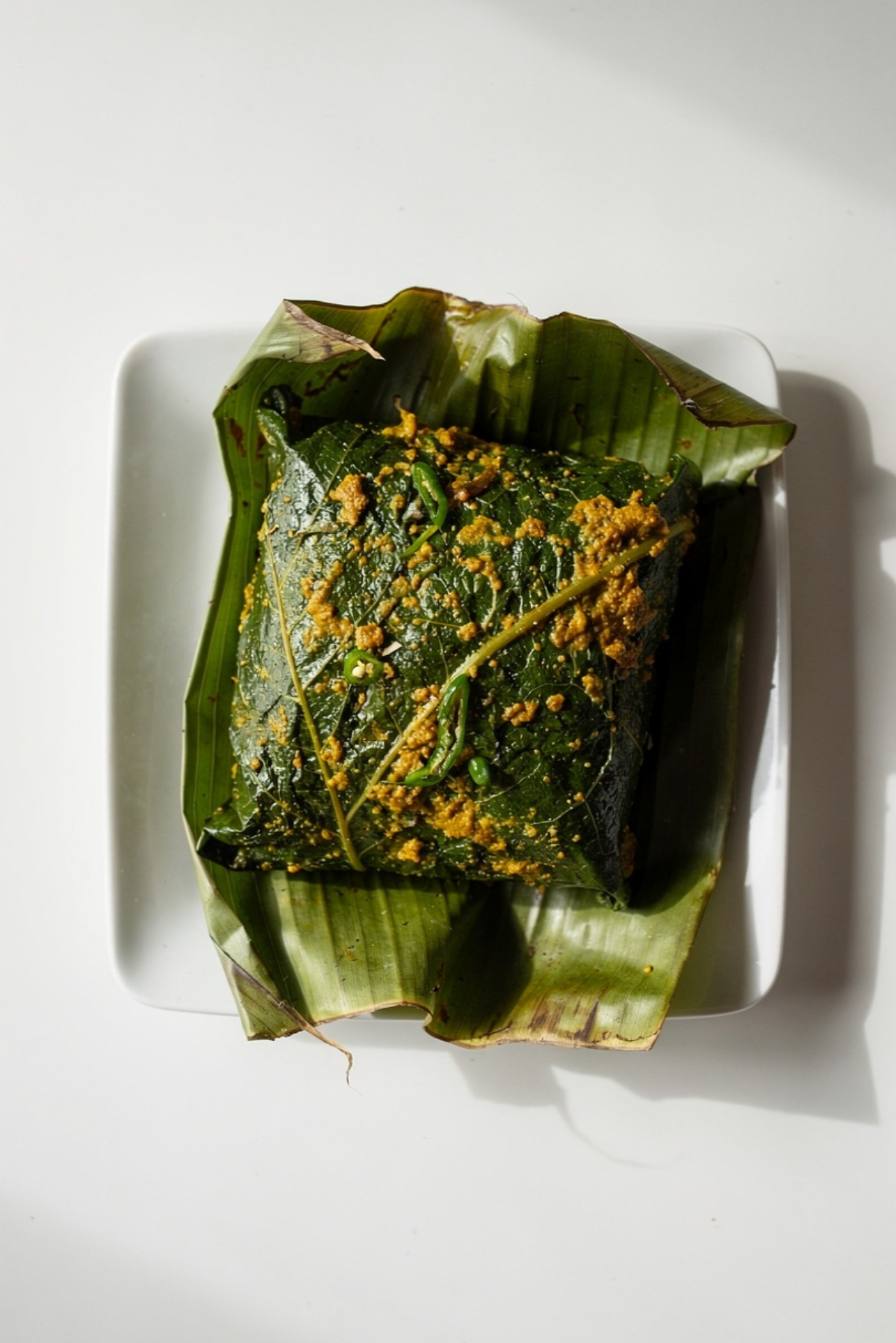
Pat Shak-er Paturi (Jute Leaf Paturi)
Pat Shak-er Paturi (Jute Leaf Paturi) is the kind of dish that feels quiet at first, then completely surprises you. Soft jute leaves meet sharp mustard, sweet coconut, fresh green chili, and that unmistakable aroma of mustard oil. Everything gets tucked into banana leaves, where the flavors steam together until the whole kitchen smells earthy, warm, and deeply comforting.
Trust me, you’re going to love this. It is simple, bold, and a little nostalgic, the kind of Bengali-style cooking that makes vegetables feel special without trying too hard.
A Leafy Bengali Parcel Full of Comfort
There is something beautiful about opening a banana leaf parcel at the table. The steam comes out first, then the smell of mustard and coconut follows, and finally you see those tender greens sitting in a glossy, spicy paste.
This dish works because it feels both rustic and elegant. The jute leaves soften gently, the mustard brings heat and depth, and the coconut rounds everything out with a mellow sweetness. Let me tell you, it’s worth every bite.
A Little Story Behind This Bengali Favorite
Paturi is a traditional Bengali cooking style where food is coated with a flavorful paste, wrapped in leaves, and cooked gently. Fish paturi is more famous, but leafy versions like this one have their own charm, especially in home kitchens where seasonal greens are treated with real love.
Jute leaves, called pat shak in Bengali, are known for their slightly earthy taste and soft texture once cooked. When paired with mustard paste and banana leaf, they turn into something fragrant, silky, and deeply satisfying.
Why This Recipe Earns a Spot in Your Kitchen
Once you make this, you will see why it feels so reliable. It is simple enough for a weeknight, but it has that wrapped-and-steamed magic that makes it feel thoughtful.
Versatile: Serve it with plain rice, khichuri, or even as part of a bigger Bengali meal. It slips easily into both simple lunches and special spreads.
Budget-Friendly: The ingredients are humble and affordable, especially if jute leaves are in season. A little mustard, coconut, and oil go a long way.
Quick and Easy: The prep is mostly blending, mixing, wrapping, and steaming. No complicated cooking skills needed.
Customizable: You can adjust the chili, mustard, coconut, and oil to match your taste. Softer, sharper, milder, or richer, it listens to you.
Crowd-Pleasing: The aroma alone gets people curious. Once they taste the mustardy greens, the dish usually disappears fast.
Make-Ahead Friendly: You can prepare the parcels earlier and cook them when needed. This one’s a total game-changer for planned meals.
Great for Leftovers: Leftover filling tastes lovely mixed with warm rice. The flavor deepens after resting.
Chef Notes for Getting That Deep Mustard Aroma
Before we move into the tools and ingredients, let’s talk about the small details that make this dish shine. Paturi is simple, but simple food loves attention.
- Soak mustard seeds before blending so the paste turns smoother and less harsh.
- Use mustard oil generously but wisely, because it carries the flavor.
- Warm banana leaves briefly before wrapping so they become flexible and do not tear.
- Keep the heat gentle while cooking, since slow steaming keeps the greens tender.
- Rest the parcels for a few minutes after cooking so the flavors settle beautifully.
Kitchen Tools You Will Need
Now that the flavor path is clear, here are the tools that make the cooking feel smooth and easy.
Blender or grinding stone: This helps make the mustard, coconut, and chili paste smooth enough to coat the greens.
Mixing bowl: You need one roomy bowl to combine the jute leaves with the paste without making a mess.
Banana leaves: These hold the mixture and add a soft, grassy aroma while cooking.
Steamer or heavy pan with lid: Either one works for gentle cooking. A pan gives a slightly deeper leaf aroma if cooked carefully.
Kitchen twine or toothpicks: These help secure the parcels so the filling stays tucked inside.
Ingredients You Will Need for This Mustardy Leaf Parcel
And now let’s gather everything. The ingredient list is short, but every item has a purpose, and together they create that earthy, sharp, cozy flavor.
- Fresh jute leaves: 4 cups, washed and roughly chopped, these become soft and silky once cooked.
- Yellow mustard seeds: 2 tablespoons, soaked for 20 minutes, they bring the bold Bengali-style sharpness.
- Black mustard seeds: 1 tablespoon, soaked for 20 minutes, they add deeper heat and character.
- Fresh grated coconut: 1/2 cup, it softens the mustard bite and adds gentle sweetness.
- Green chilies: 3, use 2 for blending and 1 slit for extra aroma.
- Turmeric powder: 1/2 teaspoon, it gives warmth and a golden tone.
- Salt: 1 teaspoon, or to taste, it balances the bitterness and spice.
- Mustard oil: 3 tablespoons, plus 1 teaspoon for brushing the leaves, it gives the dish its signature aroma.
- Sugar: 1/2 teaspoon, optional, it rounds out the sharp mustard.
- Banana leaves: 4 medium pieces, softened over gentle heat, they wrap and perfume the filling.
Easy Ingredient Swaps That Still Taste Lovely
If you are missing something, do not panic. This dish is forgiving as long as you keep the mustardy, leafy spirit alive.
Fresh jute leaves: Spinach, amaranth leaves, or malabar spinach can work, though the flavor will be milder.
Fresh grated coconut: Unsweetened desiccated coconut soaked in warm water can be used.
Yellow mustard seeds: Use all black mustard seeds, but reduce slightly if you prefer less sharpness.
Mustard oil: Use a neutral oil with 1 teaspoon extra mustard paste, though the aroma will be softer.
Banana leaves: Parchment paper can help with wrapping, but banana leaves give better fragrance.
The Flavor Heroes in This Dish
Two ingredients carry the soul of this recipe, so let’s give them a little attention before we cook.
Jute Leaves: These greens have an earthy, slightly slippery texture when cooked, which makes them perfect for soaking up bold pastes.
Mustard Seeds: Once soaked and blended, they create that punchy, warm, almost nose-tingling flavor that makes Bengali paturi so memorable.
Let’s Wrap, Steam, and Bring It All Together
Here are the steps you’re going to follow. We will soften the leaves, make the paste, wrap everything neatly, and cook it gently until the aroma tells you it is ready.
- Preheat Your Equipment: Warm a steamer or place a heavy pan over low heat. Briefly pass the banana leaves over low flame or a hot pan for a few seconds so they become flexible and easy to fold.
- Combine Ingredients: Drain the soaked yellow mustard seeds and black mustard seeds. Blend them with grated coconut, 2 green chilies, turmeric powder, salt, sugar, and 3 tablespoons mustard oil into a thick paste. Add a splash of water only if needed.
- Prepare Your Cooking Vessel: Brush each softened banana leaf with a little mustard oil. If using a pan, place a small rack or an extra banana leaf at the bottom to prevent direct scorching.
- Assemble the Dish: Mix the chopped jute leaves with the mustard coconut paste until every leaf is coated. Divide the mixture into 4 portions, place each portion in the center of a banana leaf, add a small piece of slit green chili, then fold into neat parcels and secure with twine or toothpicks.
- Cook to Perfection: Place the parcels in the steamer or covered pan. Steam or cook over low heat for 18 minutes, turning once if using a pan, until the leaves are tender and the paste smells cooked.
- Finishing Touches: Let the parcels rest for 5 minutes before opening. This keeps the filling moist and lets the mustard mellow slightly.
- Serve and Enjoy: Open each parcel at the table and serve warm with steamed rice. The first spoonful should be soft, mustardy, and fragrant.
How the Texture and Flavor Build While Cooking
As the parcels cook, the jute leaves soften into a tender, almost silky texture. The mustard paste loses its raw edge and becomes rounded, while the coconut melts into the background with a gentle sweetness.
The banana leaf does something quiet but important. It perfumes the filling without overpowering it, giving every bite a warm, grassy aroma. That contrast of sharp mustard, soft greens, and fragrant leaf wrapping is what makes the dish feel so comforting.
Little Tips That Make Cooking Easier
Before you start wrapping, keep these small tricks in mind. They make the process cleaner and the final dish tastier.
- Use a thick paste: A watery paste can leak from the parcels and weaken the flavor.
- Taste the paste before mixing: Mustard can be sharp, so adjust salt, sugar, and chili early.
- Do not overfill: Smaller parcels cook more evenly and are easier to fold.
- Rest before serving: A short rest makes the flavor smoother.
Mistakes to Avoid for Better Paturi
This dish is not difficult, but a few small mistakes can change the texture. Here is what to watch for.
- Skipping the mustard soak: This can make the paste gritty and too bitter.
- Using high heat: Strong heat can scorch the banana leaves before the filling cooks.
- Adding too much water: The filling should be moist, not runny.
- Opening too soon: Letting the parcels rest helps the flavor settle.
A Quick Look at the Nutrition
Servings: 4
Calories per serving: 145
Note: These are approximate values.
Timing Guide for a Smooth Cook
Prep Time: 25 minutes
Cook Time: 18 minutes
Total Time: 43 minutes
Make-Ahead and Storage Tips
If you want to get ahead, prepare the mustard coconut paste and wash the greens earlier in the day. Keep them separate in the fridge, then mix and wrap before cooking.
Cooked parcels can be stored in an airtight container for up to 2 days. Reheat gently in a steamer or covered pan over low heat. Freezing is not ideal because the texture of the greens can become watery after thawing, but it is possible if needed.
How to Serve It Beautifully
Serve this with hot steamed rice and a squeeze of lime on the side if you enjoy brightness. It also pairs nicely with dal, begun bhaja, or a simple cucumber salad.
For a homestyle plate, place the opened parcel directly beside rice and spoon the mustardy greens over the top. The rice catches all that flavorful oil and paste, and honestly, that is the best part.
Creative Leftover Transformations
Leftovers are surprisingly useful. Mix the filling into warm rice with a drizzle of mustard oil for a quick lunch. You can also tuck it into a roti roll with sliced cucumber for a simple snack.
Another lovely idea is to stir leftover paturi into soft mashed potatoes and shape it into small patties. Pan-cook them lightly for a crisp outside and a soft, leafy center.
Extra Tips for Freshness and Flavor
Use fresh jute leaves whenever possible, because older leaves can taste more bitter. Wash them well and drain fully before mixing so the paste stays thick.
If the mustard feels too strong, add a little extra coconut next time. If you love heat, add one more green chili. This is a very personal dish, and once you make it once, you will know exactly how you like it.
Make It a Showstopper
For presentation, serve each parcel still wrapped and let guests open their own. That little burst of steam feels special every single time.
You can brush the outside of the banana leaves with a tiny bit of mustard oil before serving so they look glossy. Place the parcel on a plain white plate to let the green leaf and golden filling stand out.
Variations to Try
- Spinach Paturi: Use spinach instead of jute leaves for a softer and milder version.
- Extra Coconut Style: Increase coconut to 3/4 cup for a sweeter, creamier filling.
- Chili-Lover Version: Add 1 extra green chili to the paste for sharper heat.
- Sesame Twist: Add 1 tablespoon white sesame seeds to the paste for nutty depth.
- Mixed Greens Paturi: Combine jute leaves with amaranth or spinach for layered flavor.
FAQ’s
Q1: Can I make this without banana leaves?
A1: Yes, you can use parchment paper, but banana leaves give the best aroma and traditional feel.
Q2: Why does my mustard paste taste bitter?
A2: It may not have soaked long enough, or it may have been blended too aggressively. A little coconut and sugar can help balance it.
Q3: Can I use frozen jute leaves?
A3: Yes, but thaw and squeeze out excess water first so the filling does not become runny.
Q4: Is this dish spicy?
A4: It has a gentle heat from green chilies and mustard. You can reduce the chilies for a milder version.
Q5: Can I cook it in a pan instead of steaming?
A5: Yes. Cook the parcels covered on low heat, turning once, and keep the heat gentle.
Q6: What should I serve with it?
A6: Plain steamed rice is the best match because it balances the strong mustard flavor.
Q7: Can I prepare the parcels ahead of time?
A7: Yes, you can wrap them a few hours ahead and keep them chilled until cooking.
Q8: How do I stop the parcels from leaking?
A8: Keep the paste thick, avoid overfilling, and fold the banana leaves tightly.
Q9: Is this recipe vegan?
A9: Yes, it is naturally vegan when made with the ingredients listed here.
Q10: Can I reduce the mustard oil?
A10: You can reduce it slightly, but the flavor will be less bold and aromatic.
Conclusion
Pat Shak-er Paturi (Jute Leaf Paturi) is one of those recipes that reminds you how powerful simple ingredients can be. A handful of greens, a sharp mustard paste, a little coconut, and banana leaves come together into something fragrant, comforting, and full of character.
Make it once with hot rice, open the parcel slowly, and enjoy that first warm spoonful. Trust me, this one belongs in your kitchen.
Print
Pat Shak-er Paturi (Jute Leaf Paturi)
- Prep Time: 25 minutes
- Cook Time: 18 minutes
- Total Time: 43 minutes
- Yield: 4 servings 1x
- Category: Side Dish
- Method: Steaming
- Cuisine: Bengali
- Diet: Vegan
Description
A traditional Bengali-style jute leaf parcel made with mustard, coconut, green chilies, and mustard oil, wrapped in banana leaves and gently steamed until tender and fragrant.
Ingredients
- 4 cups fresh jute leaves, washed and roughly chopped
- 2 tablespoons yellow mustard seeds, soaked for 20 minutes
- 1 tablespoon black mustard seeds, soaked for 20 minutes
- 1/2 cup fresh grated coconut
- 3 green chilies, divided
- 1/2 teaspoon turmeric powder
- 1 teaspoon salt, or to taste
- 3 tablespoons mustard oil
- 1 teaspoon mustard oil, for brushing banana leaves
- 1/2 teaspoon sugar, optional
- 4 medium banana leaf pieces, softened over gentle heat
Instructions
- Warm a steamer or place a heavy pan over low heat, then briefly soften the banana leaves over low flame or a hot pan.
- Drain the soaked yellow mustard seeds and black mustard seeds.
- Blend the drained mustard seeds with grated coconut, 2 green chilies, turmeric powder, salt, sugar, and 3 tablespoons mustard oil into a thick paste, adding only a tiny splash of water if needed.
- Brush each softened banana leaf with 1 teaspoon mustard oil.
- Mix the chopped jute leaves with the mustard coconut paste until fully coated.
- Divide the mixture into 4 portions and place each portion in the center of a banana leaf.
- Add a small piece of the remaining slit green chili to each portion, then fold into parcels and secure with twine or toothpicks.
- Steam or cook the parcels covered over low heat for 18 minutes, turning once if using a pan.
- Let the parcels rest for 5 minutes before opening.
- Serve warm with steamed rice.
Notes
- Keep the mustard paste thick so the filling does not leak.
- Soaking the mustard seeds helps create a smoother, less bitter paste.
- Banana leaves add the best aroma, but parchment paper can be used if needed.
- Serve warm for the best texture and fragrance.
Nutrition
- Serving Size: 1 parcel
- Calories: 145
- Sugar: 1g
- Sodium: 590mg
- Fat: 11g
- Saturated Fat: 3g
- Unsaturated Fat: 8g
- Trans Fat: 0g
- Carbohydrates: 10g
- Fiber: 4g
- Protein: 4g
- Cholesterol: 0mg
Keywords: jute leaf paturi, pat shak recipe, Bengali paturi, mustard coconut greens, vegan Bengali recipe