Mafroukeh
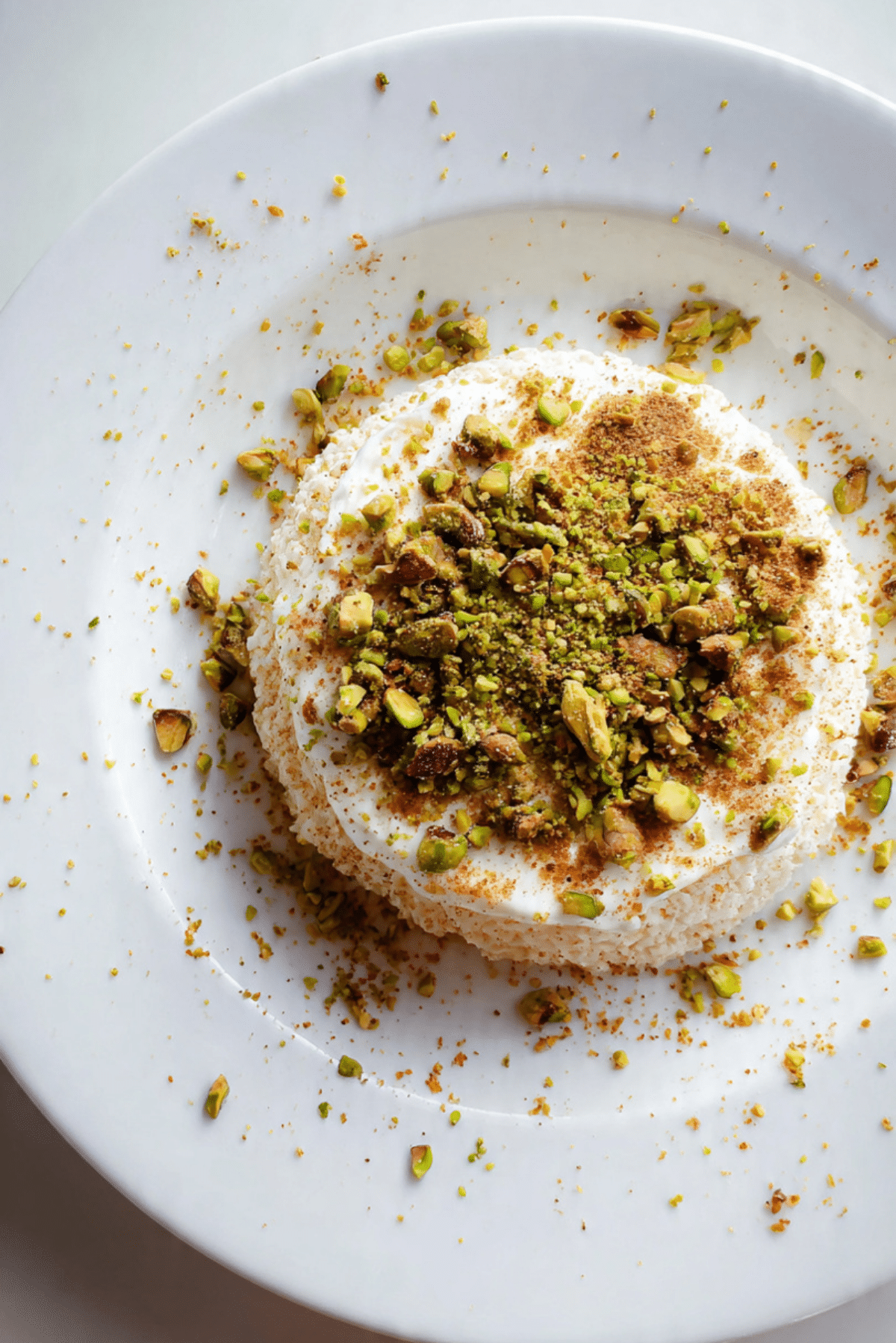
There’s something magical about desserts that tell a story — and Mafroukeh does just that with every bite. This Middle Eastern delight wraps you in the scent of rose water and orange blossom, cradled by a soft, semolina-rich base and topped with creamy ashta and vibrant pistachios. It’s indulgent, yes, but it’s also deeply comforting. Whether you’ve grown up with it or it’s your first time trying, Mafroukeh is the kind of dessert that becomes a memory.
Behind the Recipe
Mafroukeh takes me right back to my grandmother’s kitchen. The soft bubbling of semolina in ghee, the perfume of floral waters wafting through the air, and the clatter of porcelain dishes being set out with care — it was always a celebration. It wasn’t just a dessert, it was a shared moment, a reason to gather and savor. This recipe keeps that tradition alive in every layer.
Recipe Origin or Trivia
Mafroukeh is a classic Lebanese dessert, cherished especially during Ramadan and festive gatherings. Its name comes from the Arabic word “farak,” meaning “to rub,” which refers to how the semolina is gently toasted and mixed. What makes it stand out is the marriage of textures: the grainy warmth of the semolina base meets the silky creaminess of ashta and the nutty crunch of pistachios. It’s a dessert that celebrates contrast and harmony — a hallmark of Levantine cuisine.
Why You’ll Love Mafroukeh
Let me tell you, once you make Mafroukeh at home, there’s no turning back. It’s simple yet luxurious, familiar yet surprising. Here’s why it’s going to be a hit:
Versatile: Serve it as a plated dessert, in small cups, or even roll it into mini bites for gatherings.
Budget-Friendly: Made mostly from pantry staples like semolina, milk, and sugar, it won’t break the bank.
Quick and Easy: With a bit of stirring and layering, it comes together fast — no baking needed.
Customizable: Add rose petals, swap in different nuts, or play with the cream — it adapts beautifully.
Crowd-Pleasing: The flavors are gentle, floral, and sweet — appealing to all ages.
Make-Ahead Friendly: You can prep the components in advance and assemble just before serving.
Great for Leftovers: Leftovers store well and taste just as delicious the next day (if they last that long).
Chef’s Pro Tips for Perfect Results
To really bring out Mafroukeh’s charm, keep these expert touches in mind:
- Toast the semolina slowly in ghee for a deep, nutty flavor.
- Don’t skimp on the floral waters — they’re the heart of the aroma.
- Chill your ashta so it sets nicely and doesn’t run.
- Use fresh, vibrant pistachios for the perfect contrast in both taste and color.
- Serve it slightly warm or room temp with cold ashta — it heightens the sensory experience.
Kitchen Tools You’ll Need
Before we get started, make sure your kitchen is stocked with the essentials:
Saucepan: To toast and cook the semolina mixture.
Whisk: Helps keep your cream smooth and lump-free.
Spatula: For mixing the base and layering without mess.
Small bowls or molds: To shape or serve the dessert in portions.
Serving plate or tray: Ideal for the final presentation.
Ingredients in Mafroukeh
Mafroukeh comes together through a beautiful balance of rich, fragrant, and creamy elements. Here’s what you’ll need:
- Semolina: 1 cup — The heart of the base, toasted to bring out a nutty flavor and gentle bite.
- Ghee: 3 tablespoons — Adds richness and enhances the toasting process.
- Sugar: ½ cup — Balances the earthiness of semolina with a gentle sweetness.
- Milk: 1 cup — Softens the semolina and binds the mixture into a smooth dough.
- Rose Water: 1 tablespoon — Brings a soft floral aroma.
- Orange Blossom Water: 1 tablespoon — Lends a bright, citrusy fragrance.
- Ashta Cream: 1 cup — Thick, clotted-style cream that crowns the dessert with silky richness.
- Crushed Pistachios: ½ cup — For color, texture, and a nutty finish.
Ingredient Substitutions
We all need flexibility sometimes. Here’s how you can adapt:
Ghee: Unsalted butter works in a pinch, though it has a lighter flavor.
Milk: Use plant-based milk like almond or oat for a dairy-free twist.
Ashta: Mascarpone or whipped ricotta can substitute, but chill well before using.
Pistachios: Slivered almonds or crushed walnuts bring a different texture but still complement the flavors.
Ingredient Spotlight
Semolina: This coarse wheat flour is essential for that dense yet fluffy texture. It absorbs flavor beautifully and provides the perfect base.
Ashta Cream: A staple in many Middle Eastern desserts, ashta is creamy, thick, and slightly sweet — the perfect cooling contrast to warm semolina.

Instructions for Making Mafroukeh
This dessert may feel elegant and complex, but it’s surprisingly easy once you break it down. Here’s how to bring it to life:
-
Preheat Your Equipment:
Start by setting out your serving plates and chilling the ashta if not already cold. -
Combine Ingredients:
In a saucepan, melt the ghee over medium heat. Add the semolina and toast it gently, stirring constantly, until it turns golden and aromatic. -
Prepare Your Cooking Vessel:
Once toasted, add the sugar and milk to the semolina. Stir until the mixture thickens and pulls away from the sides of the pan. Add rose water and orange blossom water, mixing well. -
Assemble the Dish:
Spoon the warm semolina base onto your serving plate. Flatten it gently with a spoon or your fingers to create a smooth surface. Let it cool slightly. -
Cook to Perfection:
While the base is cooling, make sure your ashta is creamy and ready to use. If needed, whip it lightly for extra smoothness. -
Finishing Touches:
Spread a thick layer of ashta over the semolina base. Sprinkle generously with crushed pistachios. -
Serve and Enjoy:
Chill briefly if desired or serve immediately for contrast. Pair with Arabic coffee or mint tea and enjoy every creamy, nutty, floral bite.
Texture & Flavor Secrets
Mafroukeh is all about balance. The warm, toasty graininess of the semolina base plays beautifully against the cool, smooth ashta cream. Then, you get the crunch of pistachios and the light perfume of rose and orange blossom in every bite. It’s soft, creamy, nutty, and just the right amount of sweet.
Cooking Tips & Tricks
Here’s how to make your Mafroukeh unforgettable:
- Toast the semolina slowly for deeper flavor.
- Chill your ashta well for clean layering.
- Use high-quality rose and orange blossom water for best aroma.
- Let the semolina cool slightly before adding cream to prevent melting.
What to Avoid
A few common pitfalls can throw off your Mafroukeh — but they’re easy to avoid:
- Don’t over-toast the semolina — it can turn bitter.
- Avoid adding too much liquid or your base won’t hold shape.
- Don’t skip the floral waters — they’re what give Mafroukeh its signature charm.
- Never serve it piping hot — let it cool so the flavors meld properly.
Nutrition Facts
Servings: 6
Calories per serving: 320
Note: These are approximate values.
Preparation Time
Prep Time: 15 minutes
Cook Time: 10 minutes
Total Time: 25 minutes
Make-Ahead and Storage Tips
Mafroukeh is wonderfully flexible when it comes to prep. You can make the semolina base a day ahead and store it in the fridge. Ashta can also be made or bought in advance. Assemble just before serving or a few hours ahead and chill. Leftovers keep well in the fridge for 2 to 3 days.
How to Serve Mafroukeh
Serve Mafroukeh in a shallow dish or plate, allowing the layers to be visible. Garnish with extra pistachios or even edible dried rose petals for flair. It pairs beautifully with Arabic coffee or a light floral tea, and it’s equally great as a dinner party dessert or a sweet mid-day pick-me-up.
Creative Leftover Transformations
Got extra Mafroukeh? Lucky you.
- Roll the mixture into small balls and coat them with pistachios for a bite-sized treat.
- Layer it into mini dessert cups with a drizzle of honey for a modern twist.
- Spread leftovers on toast or brioche for a luxurious breakfast.
Additional Tips
- Use fresh, raw pistachios for best color and crunch.
- Adjust sweetness to your taste — you can reduce sugar slightly if needed.
- For extra texture, mix a few chopped pistachios into the base itself.
Make It a Showstopper
Presentation matters. Serve Mafroukeh in a glass tray or elegant ceramic plate. Garnish with edible flowers or a delicate swirl of extra ashta on top. Wipe the edges of the plate for a clean, polished look.
Variations to Try
- Berry Twist: Add a few raspberries on top for a tart-sweet contrast.
- Nut Mix: Try walnuts or almonds for a different crunch.
- Chocolate Touch: Drizzle a little melted white chocolate for richness.
- Date Layer: Add a layer of finely chopped dates between the semolina and cream.
- Mini Cups: Serve in individual ramekins for party-friendly portions.
FAQ’s
Q1: Can I make Mafroukeh dairy-free?
A1: Yes, substitute milk with almond or oat milk, and use a dairy-free cream for the topping.
Q2: Is Mafroukeh gluten-free?
A2: Traditional semolina contains gluten, but you can experiment with fine cornmeal for a GF version.
Q3: Can I use store-bought ashta?
A3: Absolutely. Just be sure to chill it well before spreading.
Q4: How long does it last in the fridge?
A4: Up to 3 days, tightly covered.
Q5: Can I freeze Mafroukeh?
A5: It’s not recommended, as the texture of the cream may suffer.
Q6: What’s the best occasion to serve it?
A6: It’s perfect for Ramadan, Eid, or any special family gathering.
Q7: Is it very sweet?
A7: It’s moderately sweet — you can easily adjust the sugar to your taste.
Q8: What does Mafroukeh mean?
A8: It refers to how the semolina is rubbed and toasted, from the Arabic word “farak.”
Q9: Can I use butter instead of ghee?
A9: Yes, unsalted butter works well, though the flavor is slightly lighter.
Q10: Can I prepare it in advance?
A10: Definitely. Make the components ahead and assemble when ready to serve.
Conclusion
Mafroukeh is the kind of dessert that lingers in memory. With its comforting warmth, creamy richness, and fragrant floral notes, it’s more than a recipe — it’s an experience. Whether you’re making it for a celebration or just because, trust me, this one’s worth every bite.
Print
Mafroukeh
- Prep Time: 15 minutes
- Cook Time: 10 minutes
- Total Time: 25 minutes
- Yield: 6 servings 1x
- Category: Dessert
- Method: Stovetop
- Cuisine: Lebanese
- Diet: Vegetarian
Description
A classic Lebanese dessert made with toasted semolina dough, creamy ashta, and fragrant floral waters, all topped with crunchy crushed pistachios.
Ingredients
- 1 cup semolina
- 3 tablespoons ghee
- 1/2 cup sugar
- 1 cup milk
- 1 tablespoon rose water
- 1 tablespoon orange blossom water
- 1 cup ashta cream
- 1/2 cup crushed pistachios
Instructions
- Set out your serving plates and chill the ashta if not already cold.
- In a saucepan, melt ghee over medium heat. Add semolina and toast until golden and aromatic.
- Add sugar and milk to the semolina. Stir continuously until thickened and the mixture pulls away from the sides. Mix in rose and orange blossom waters.
- Spoon the semolina base onto a serving plate and flatten gently. Let it cool slightly.
- Spread chilled ashta cream over the cooled semolina layer.
- Top generously with crushed pistachios.
- Serve immediately or chill briefly before serving with Arabic coffee or mint tea.
Notes
- Toast semolina slowly for a richer flavor.
- Use high-quality floral waters for the best aroma.
- Let the base cool before adding ashta to prevent melting.
- Store leftovers in the fridge for up to 3 days.
Nutrition
- Serving Size: 1 plate
- Calories: 320
- Sugar: 18g
- Sodium: 40mg
- Fat: 18g
- Saturated Fat: 10g
- Unsaturated Fat: 6g
- Trans Fat: 0g
- Carbohydrates: 34g
- Fiber: 2g
- Protein: 6g
- Cholesterol: 35mg
Keywords: mafroukeh, Lebanese dessert, ashta, semolina, pistachio, Middle Eastern sweets