Japchae (Korean Glass Noodles)
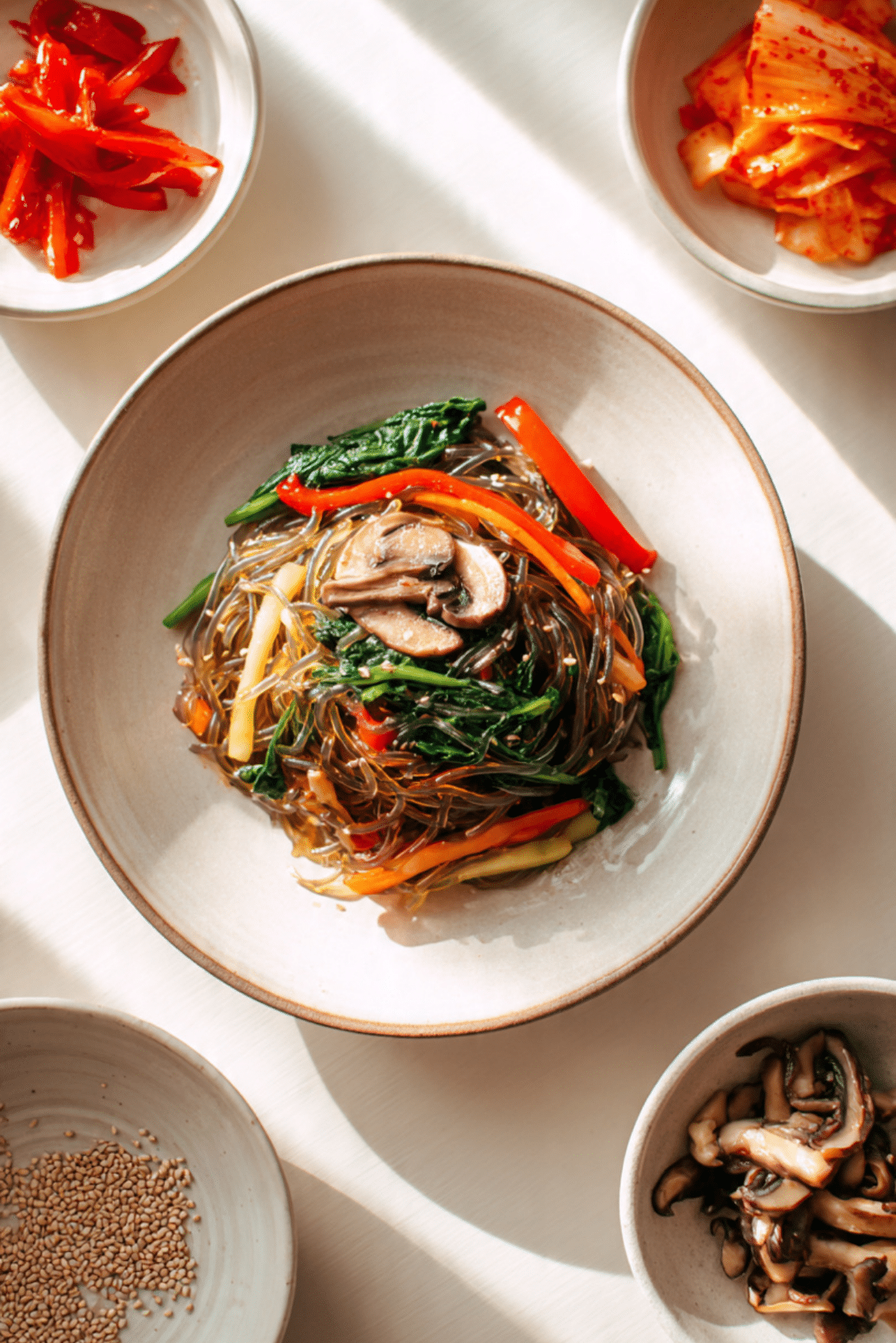
Japchae is a colorful, glossy, and aromatic Korean dish that will make your taste buds dance. Imagine soft glass noodles glistening with sesame oil, tender vegetables, and a hint of sweet-savory soy sauce. Each bite is a perfect balance of textures and flavors, from the gentle chew of the noodles to the crisp freshness of the vegetables. Trust me, you’re going to love this and let me tell you, it’s worth every bite.
Behind the Recipe
This dish has always felt like a celebration on a plate in my kitchen. I remember the first time I made Japchae, the kitchen filled with a warm, nutty aroma from sesame oil, and the vibrant colors of the vegetables practically made me pause to admire the beauty before even tasting. It’s the kind of dish that brings people together and sparks joy in the process of cooking.
Recipe Origin or Trivia
Japchae originated in Korea as a royal court dish but has since become a beloved comfort food enjoyed by families everywhere. Traditionally, it was prepared with beef and served at festive occasions, weddings, and holidays. The noodles, made from sweet potato starch, have a unique chewy texture that makes Japchae stand out from ordinary noodle dishes.
Why You’ll Love Japchae
From weekday dinners to festive gatherings, Japchae is a total crowd-pleaser. Here’s why:
Versatile: Works as a side dish or a main dish, warm or at room temperature, perfect for any meal.
Budget-Friendly: Uses simple ingredients like vegetables, noodles, and soy sauce without breaking the bank.
Quick and Easy: Once the vegetables are prepped, cooking comes together quickly in a single pan.
Customizable: Swap in your favorite vegetables or add tofu or mushrooms for different flavors.
Crowd-Pleasing: Its vibrant colors and glossy finish make it irresistible at any gathering.
Make-Ahead Friendly: Prepares beautifully a day ahead, flavors deepen with time.
Great for Leftovers: Noodles hold up well, and the dish tastes even better after a night in the fridge.
Chef’s Pro Tips for Perfect Results
Making Japchae is simple when you keep a few tips in mind:
- Soak the glass noodles in warm water until soft but not mushy.
- Cook vegetables separately to maintain their bright color and crisp texture.
- Toss everything together gently with the sauce to avoid breaking the noodles.
- Finish with sesame seeds for an extra nutty aroma and visual appeal.
Kitchen Tools You’ll Need
To make your cooking smooth and enjoyable, here are the essentials:
Large Mixing Bowl: For soaking the noodles and combining ingredients.
Sharp Knife: Ensures precise slicing of vegetables for even cooking.
Frying Pan or Skillet: For stir-frying vegetables and noodles together.
Tongs or Chopsticks: For tossing the noodles and sauce without breaking the strands.
Measuring Cups and Spoons: To keep the sauce balanced and flavorful.
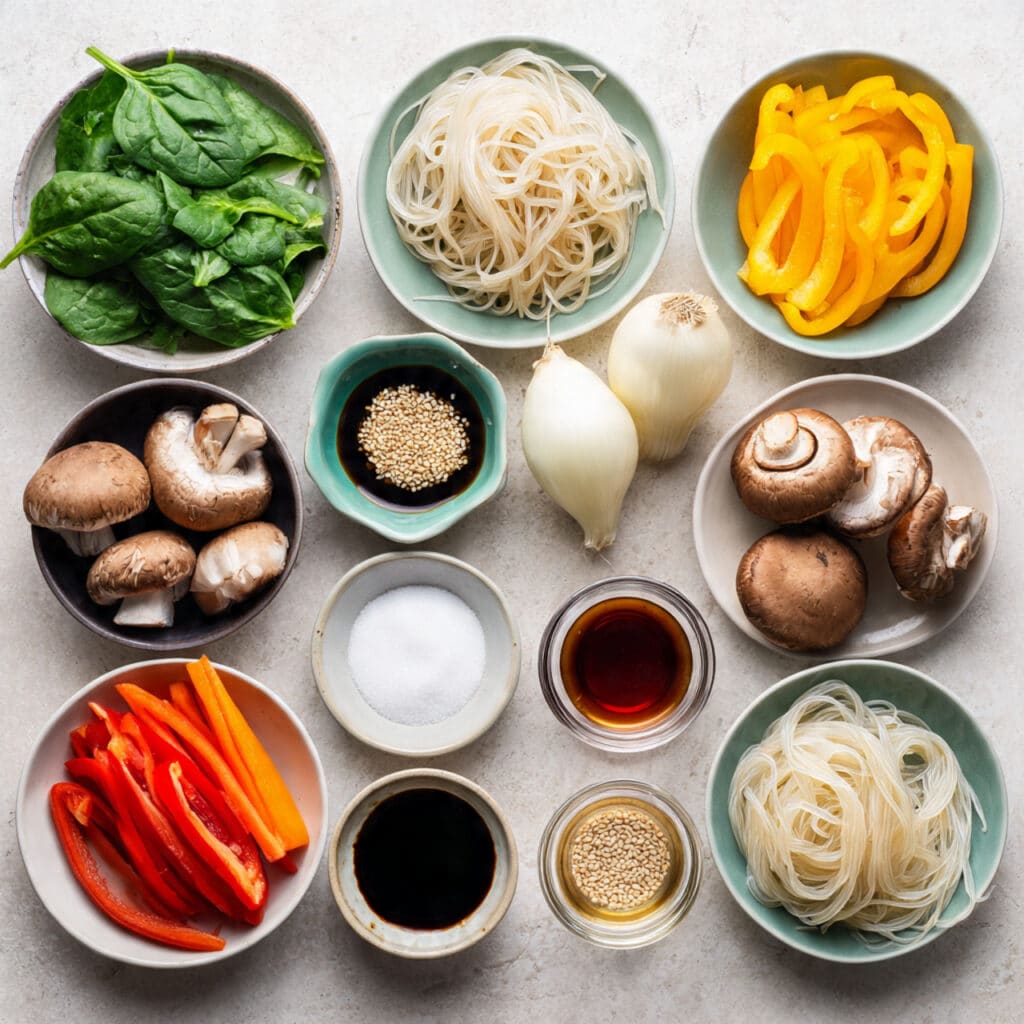
Ingredients in Japchae
Each ingredient plays its part to create harmony of flavor and texture:
- Glass Noodles: 200 grams, chewy base that absorbs the sauce beautifully.
- Spinach: 100 grams, adds a fresh, leafy green contrast.
- Carrots: 1 medium, julienned, provide sweetness and crunch.
- Shiitake Mushrooms: 6–8 pieces, sliced, earthy depth and chewy texture.
- Red Bell Pepper: 1, sliced, brings color and subtle sweetness.
- Yellow Bell Pepper: 1, sliced, brightens the dish visually and adds flavor.
- Onion: 1 small, thinly sliced, adds natural sweetness.
- Garlic: 2 cloves, minced, infuses the dish with aromatic warmth.
- Sesame Oil: 2 tablespoons, for nutty flavor and gloss.
- Soy Sauce: 3 tablespoons, provides savory depth.
- Sugar: 1 teaspoon, balances savory elements.
- Sesame Seeds: 1 teaspoon, for garnish and added nuttiness.
Ingredient Substitutions
If needed, these swaps work well:
Glass Noodles: Sweet potato noodles or mung bean noodles.
Spinach: Kale or bok choy for slightly different textures.
Shiitake Mushrooms: Portobello or cremini mushrooms.
Sesame Oil: Toasted sunflower oil for a milder flavor.
Ingredient Spotlight
Glass Noodles: Made from sweet potato starch, these noodles are naturally chewy and absorb flavors beautifully.
Sesame Oil: Adds a warm, nutty aroma that defines the dish’s signature taste.
Instructions for Making Japchae
Cooking Japchae is a joyful process, and here’s how to get it perfect:
- Preheat Your Equipment: Heat your frying pan on medium to prepare for stir-frying.
- Combine Ingredients: Soak glass noodles in warm water until tender. Mix soy sauce, sesame oil, and sugar in a small bowl to make the sauce.
- Prepare Your Cooking Vessel: Heat a bit of oil in the pan, sauté garlic and onions until fragrant.
- Assemble the Dish: Add carrots, bell peppers, mushrooms, and spinach separately, cooking each until just tender, then combine with the noodles.
- Cook to Perfection: Pour the sauce over the noodles and vegetables, tossing gently to coat evenly without breaking the noodles.
- Finishing Touches: Sprinkle sesame seeds over the top and drizzle a little extra sesame oil for shine and aroma.
- Serve and Enjoy: Plate the Japchae, admire the colors, and serve immediately while warm or at room temperature.
Texture & Flavor Secrets
The key is in contrasts: tender chewy noodles against crisp vegetables, earthy mushrooms against sweet bell peppers, and the nutty sesame oil tying everything together. The soy sauce and sugar balance saltiness and sweetness, creating a harmonious mouthfeel.
Cooking Tips & Tricks
Making Japchae a success is easier with a few tricks:
- Use separate pans for vegetables to keep colors bright and textures crisp.
- Rinse noodles after soaking to prevent sticking.
- Avoid overcooking to maintain a glossy, chewy texture.
What to Avoid
Avoid these common pitfalls:
- Overcrowding the pan, which leads to soggy vegetables.
- Adding noodles too early, causing them to break.
- Using too much sauce, which can overpower delicate flavors.
Nutrition Facts
Servings: 4
Calories per serving: 220
Note: These are approximate values.
Preparation Time
Prep Time: 20 minutes
Cook Time: 15 minutes
Total Time: 35 minutes
Make-Ahead and Storage Tips
Japchae is excellent for planning ahead. Store in an airtight container in the fridge for up to 3 days. Reheat gently in a pan with a splash of sesame oil to restore glossiness. It also freezes well, though textures are best fresh.
How to Serve Japchae
Serve as a side dish with grilled meats or as a main with tofu for a vegetarian option. Pair with steamed rice or kimchi to complete a Korean-inspired meal.
Creative Leftover Transformations
Turn leftover Japchae into a noodle salad with sesame dressing or use it as a filling for wraps. Stir-fry with eggs for a quick noodle scramble or add to soups for texture and flavor.
Additional Tips
Add thinly sliced beef or tofu for extra protein. Toast sesame seeds before garnishing to boost aroma. Use a light hand when tossing to avoid breaking noodles.
Make It a Showstopper
Serve Japchae in a shallow bowl, sprinkle extra sesame seeds, and add thin green onion slices for height and visual appeal. The glossy noodles will shine under natural lighting.
Variations to Try
- Vegetarian Delight: Use tofu and extra mushrooms.
- Spicy Kick: Add gochujang or sliced chili peppers.
- Seafood Twist: Mix in shrimp or crab for a coastal version.
- Nutty Crunch: Toss with crushed peanuts or cashews.
- Colorful Garden: Add zucchini, baby corn, or snap peas for extra vibrancy.
FAQ’s
1. How long do I soak the glass noodles?
Soak them for 10–15 minutes in warm water until soft but still firm.
2. Can I use other noodles?
Yes, sweet potato or mung bean noodles work well.
3. Is Japchae served hot or cold?
Both ways work, though warm highlights the flavors best.
4. Can I make it ahead?
Absolutely, it tastes great the next day after flavors meld.
5. How do I keep vegetables crisp?
Cook each vegetable separately for just a few minutes.
6. Can I add meat?
Yes, thinly sliced beef or chicken is traditional for festive versions.
7. What’s the best oil to use?
Sesame oil for flavor and a light vegetable oil for cooking.
8. How do I store leftovers?
In an airtight container in the fridge for up to 3 days.
9. Can I freeze Japchae?
Yes, but texture is best fresh. Reheat gently to restore gloss.
10. How do I make it gluten-free?
Use gluten-free soy sauce or tamari.
Conclusion
Japchae is a dish that brings warmth, color, and irresistible flavor to your table. Its vibrant noodles, fresh vegetables, and nutty sesame notes make it a true delight. Trust me, once you try this recipe, it will become a favorite in your kitchen and a guaranteed hit at any meal.
Print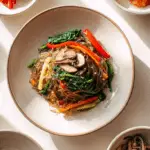
Japchae (Korean Glass Noodles)
- Prep Time: 20 minutes
- Cook Time: 15 minutes
- Total Time: 35 minutes
- Yield: 4 servings
- Category: Main or Side Dish
- Method: Stir-fry
- Cuisine: Korean
- Diet: Vegetarian
Description
A vibrant Korean dish featuring chewy glass noodles tossed with fresh vegetables and a savory-sweet sauce, perfect for any meal
Ingredients
- Glass Noodles: 200 grams
- Spinach: 100 grams
- Carrots: 1 medium, julienned
- Shiitake Mushrooms: 6–8 pieces, sliced
- Red Bell Pepper: 1, sliced
- Yellow Bell Pepper: 1, sliced
- Onion: 1 small, thinly sliced
- Garlic: 2 cloves, minced
- Sesame Oil: 2 tablespoons
- Soy Sauce: 3 tablespoons
- Sugar: 1 teaspoon
- Sesame Seeds: 1 teaspoon
Instructions
- Soak glass noodles in warm water for 10–15 minutes until soft. Drain and set aside.
- Prepare the sauce by mixing soy sauce, sesame oil, and sugar in a small bowl.
- Heat a pan over medium heat and sauté garlic and onions until fragrant.
- Add carrots, bell peppers, mushrooms, and spinach separately, cooking each until just tender.
- Combine the vegetables with the noodles and pour the sauce over. Toss gently to coat evenly.
- Sprinkle sesame seeds on top and drizzle extra sesame oil if desired.
- Serve warm or at room temperature and enjoy.
Notes
- Cook vegetables separately to maintain color and texture.
- Do not overcook noodles to keep them chewy.
- Store leftovers in an airtight container in the fridge for up to 3 days.
- Garnish with toasted sesame seeds for extra flavor.
Nutrition
- Serving Size: 1 serving
- Calories: 220
- Sugar: 3 grams
- Sodium: 550 mg
- Fat: 7 grams
- Saturated Fat: 1 gram
- Unsaturated Fat: 6 grams
- Trans Fat: 0 grams
- Carbohydrates: 35 grams
- Fiber: 3 grams
- Protein: 5 grams
- Cholesterol: 0 mg
Keywords: Japchae, Korean noodles, glass noodles, Korean cuisine, stir-fry, vegetarian noodles